
Downtown Naperville is built for activity. Restaurants, shops, offices, entertainment venues, parking facilities, and public spaces draw a steady mix of pedestrians and drivers into a relatively compact district. That combination can also produce frequent points of conflict between people walking and vehicles turning, parking, backing up, or moving through intersections. Understanding what makes downtown Naperville a hotspot for pedestrian accidents starts with looking at how people actually move through the area and where those movements overlap.
If you were struck by a vehicle while walking in Naperville, Chute, O’Malley, Knobloch & Turcy can help you evaluate what happened and your options for pursuing compensation. Call 312-775-0042 to discuss your case with a Naperville injury lawyer.
Key Takeaways
- Heavy foot traffic creates frequent interactions between pedestrians and vehicles throughout downtown Naperville.
- Intersections are particularly risky when drivers turn while pedestrians are crossing.
- Parking lots, garages, and on-street parking create additional blind spots and backing hazards.
- Restaurants, entertainment, events, and nightlife can keep pedestrian traffic active after dark.
- Construction and streetscape changes may temporarily alter familiar walking and driving routes.
Why Does Downtown Naperville Have So Much Pedestrian-Vehicle Interaction?
The primary issue is concentration. In suburban areas where destinations are spread apart, people frequently drive directly from one property to another. A downtown district works differently. A person may park once and walk between several businesses, restaurants, offices, and public spaces.
That means vehicles and pedestrians repeatedly cross paths. Drivers enter and leave parking areas while pedestrians walk along sidewalks. Vehicles turn through intersections while people use crosswalks. Drivers pull into curbside spaces while pedestrians move between parked cars and nearby businesses.
Why Are Downtown Intersections a Major Pedestrian Accident Risk?
Intersections bring several directions of travel together at once. A driver may be monitoring approaching vehicles, traffic signals, cyclists, and pedestrians while preparing to make a turn.
Right Turns Can Create Conflicts With Crosswalks
A driver preparing to turn right may look left for an opening in traffic. If the driver begins moving without checking the crosswalk again, a pedestrian approaching from the right may be overlooked. The risk can increase when pedestrians have a signal permitting them to cross at the same time a driver is permitted to turn.
Left Turns Require Drivers to Divide Their Attention
Left turns can be equally challenging. Drivers may concentrate on finding a gap in oncoming traffic and then accelerate through the turn. A pedestrian already crossing the destination street can enter the driver’s path. Busy downtown conditions make these situations more complicated because several vehicles and pedestrians may be moving through an intersection simultaneously.
Distractions in Crowded Parking Lots
Parking is another major reason downtown areas can generate pedestrian collisions. Downtown visitors frequently use on-street spaces, surface lots, and parking garages, which means vehicles are constantly entering, leaving, backing, and maneuvering near people on foot.
A driver backing out may have limited visibility around neighboring vehicles. Pedestrians may also be difficult to see when they walk behind SUVs, trucks, or other large vehicles.
Parking garages introduce additional concerns. Drivers may transition from a darker garage to brighter outdoor conditions, navigate ramps and corners, or cross sidewalks when exiting onto a street.
Someone hit by a car in a parking lot may face a complicated liability question because the collision might occur outside a traditional marked crosswalk. Evidence showing the driver’s direction of travel, visibility, speed, and actions immediately before impact can therefore become especially important.
Street-Parked Vehicles Create Dangerous Blind Spots
On-street parking is convenient for downtown businesses, but parked vehicles can limit visibility for both drivers and pedestrians. A pedestrian approaching the roadway from between parked vehicles may not be visible until relatively late. Likewise, a pedestrian may have difficulty seeing an approaching vehicle without moving closer to the travel lane.
Can Restaurants and Nightlife Increase Pedestrian Traffic After Dark?
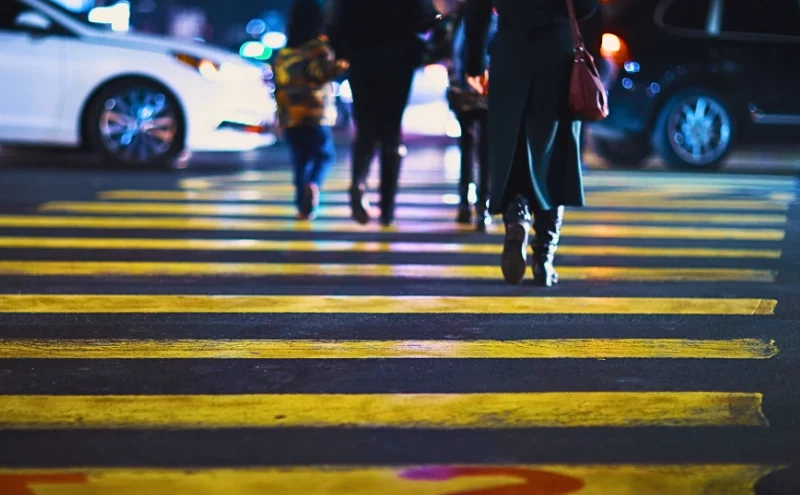
Downtown pedestrian activity does not necessarily end when offices close. Restaurants, bars, entertainment venues, and evening events can keep people walking through the district after sunset.
Reduced visibility changes the driving environment. Dark clothing may be harder to see, headlights can create glare, and pedestrians may be partially obscured by parked vehicles or other people.
Drivers unfamiliar with downtown may also spend more time looking for addresses, parking entrances, or navigation directions. That divided attention can become particularly risky when pedestrians are crossing nearby.
The issue is not simply that more people are present. It is that drivers must identify pedestrians under more demanding visual conditions while simultaneously navigating a busy commercial district.
How Do Deliveries and Rideshare Vehicles Add to Downtown Congestion?
Modern downtown traffic involves more than ordinary through traffic. Delivery drivers, food delivery services, rideshare vehicles, taxis, and commercial trucks may stop near restaurants and businesses throughout the day.
These vehicles can create temporary congestion or reduce sightlines when they stop near intersections and crosswalks. Passengers entering or leaving rideshare vehicles may also cross streets unexpectedly to reach a pickup point.
Delivery drivers may need to back into loading areas or maneuver through confined spaces. When pedestrian traffic is heavy, even a short backing movement requires careful observation.
These constantly changing traffic patterns can make downtown streets less predictable than roads where nearly every vehicle is simply traveling from one intersection to the next.
Do Festivals and Special Events Affect Pedestrian Accident Risk?
Downtown events can substantially change normal traffic patterns. Festivals, community activities, seasonal celebrations, and other gatherings may bring larger crowds into the area and increase demand for parking.
People who do not regularly visit downtown may also be unfamiliar with intersections, parking entrances, one-way streets, or designated crossing locations.
At the same time, drivers may encounter road closures, temporary signs, detours, or unusually heavy traffic. Pedestrians may walk in larger groups or take routes they would not normally use.
These conditions do not automatically lead to accidents, but they increase the number of decisions both drivers and pedestrians must make in a relatively small area.
Can Construction and Streetscape Work Create Temporary Hazards?
Construction can change familiar pedestrian and driving patterns. Sidewalk closures may redirect pedestrians to temporary routes, while lane closures can move vehicles closer to walking areas or alter normal turning patterns. Temporary barriers, equipment, signs, and construction vehicles may also affect sightlines.
Drivers who regularly travel downtown can be particularly vulnerable to mistakes when they rely on habit instead of responding to a changed traffic pattern. A familiar turn, lane, or crossing may temporarily operate differently.
There is no single feature that makes downtown Naperville a hotspot for pedestrian accidents. Instead, the risk comes from multiple factors operating together. Heavy foot traffic, busy intersections, turning vehicles, parking activity, limited sightlines, evening crowds, deliveries, rideshare stops, events, and temporary traffic changes can all increase the number of interactions between vehicles and people on foot.
If you were injured while walking in downtown Naperville, contact Chute, O’Malley, Knobloch & Turcy at 312-775-0042 to discuss your legal options with a pedestrian accident lawyer.
