
Naperville Traumatic Brain Injury Lawyer
A traumatic brain injury can disrupt memory, concentration, communication, and the ability to perform everyday tasks. When a head injury occurs because of another party’s negligence, Illinois law may allow the injured person to pursue financial compensation for the harm they face.
Our Naperville traumatic brain injury lawyers at Chute, O’Malley, Knobloch & Turcy help individuals and families understand their rights after a serious brain injury.
Brain injuries are often misunderstood. Symptoms may appear gradually, medical care can extend for months or years, and the full impact on work and daily life may take time to become clear. Our team works with Naperville clients to examine the circumstances of an accident, explain the legal process, and pursue compensation through Illinois personal injury law.
If you or a loved one suffered a traumatic brain injury in Naperville or anywhere in DuPage County, contact our injury lawyers at Chute, O’Malley, Knobloch & Turcy today. Call (312) 775-0042 for a free case evaluation.
- Se Habla Español
- Risk-Free Consultations
- 50+ Years of Combined Experience
- You Don’t Pay Unless We Win

“When someone suffers a traumatic brain injury, the questions begin immediately. Clients want to know how the injury will affect their work, their family, and their future. Our goal is to help them understand their legal options so they can focus on recovery.”

Helping Naperville Residents Navigate Life After a Traumatic Brain Injury
A traumatic brain injury affects more than a single moment in time. Medical care, rehabilitation, and cognitive therapy often continue long after the initial accident. Some people struggle with concentration, fatigue, memory loss, or mood changes that interfere with work and daily responsibilities.
Families frequently carry much of the burden during recovery. Loved ones may need to assist with transportation, medical appointments, financial planning, and everyday tasks while the injured person focuses on healing.
A Naperville traumatic brain injury lawyer helps evaluate the financial impact of the injury and pursue compensation through Illinois law when another party’s negligence played a role.
If you need guidance after a serious head injury, contact Chute, O’Malley, Knobloch & Turcy at (312) 775-0042 to discuss your situation.

Recognizing Different Severities of Brain Trauma
Brain injuries exist on a spectrum from mild to catastrophic. Each level presents unique medical and legal challenges that require tailored approaches to documentation and compensation claims.
Mild Traumatic Brain Injuries and Concussions
A concussion occurs when the brain moves rapidly inside the skull, disrupting normal function. You might lose consciousness briefly, or not at all. Symptoms include headaches, dizziness, confusion, nausea, sensitivity to light, and difficulty concentrating. While many people recover within weeks, some develop post-concussion syndrome with symptoms lasting months or years. Insurance companies routinely undervalue these injuries, treating them as minor when they have profoundly disrupted your ability to work and live normally.
Moderate Brain Injuries
Moderate traumatic brain injuries typically involve longer periods of unconsciousness, more severe symptoms, and visible changes on CT scans or MRIs. You may experience persistent headaches, seizures, difficulty with speech or coordination, and significant cognitive impairment. Recovery often requires months of intensive therapy. These injuries frequently prevent people from returning to their previous employment, particularly in jobs requiring quick decision-making, complex problem-solving, or physical coordination.
Severe and Catastrophic Brain Damage
Severe brain injuries result in extended unconsciousness, coma, or permanent vegetative states. Survivors often face paralysis, inability to communicate, profound cognitive deficits, and complete dependence on caregivers. These injuries require lifetime medical care, specialized equipment, home modifications, and round-the-clock assistance. The financial impact extends into millions of dollars, and victims need attorneys who will fight for settlements that truly reflect these extraordinary needs.
Secondary Brain Injuries
Secondary injuries develop after the initial trauma due to swelling, bleeding, decreased oxygen, or increased pressure inside the skull. Hematomas, brain swelling, and infections can worsen outcomes significantly. These complications underscore why immediate medical attention matters. From a legal perspective, delayed treatment or medical negligence that allows secondary injuries to develop may create additional claims against healthcare providers.
How Brain Injuries Happen in Naperville
Understanding the circumstances that cause brain injuries helps identify who bears legal responsibility for your losses.
Vehicle Collisions Throughout DuPage County
The force generated when vehicles collide causes occupants’ heads to snap forward and backward violently. The brain crashes against the skull, tearing blood vessels and bruising tissue. Naperville’s position along major corridors like Interstate 88, Route 59, and Ogden Avenue means heavy traffic and frequent accidents. Rear-end collisions, T-bone crashes, and head-on impacts all generate forces sufficient to cause serious brain trauma, even when airbags deploy and seat belts are worn correctly.
Motorcyclists and bicyclists face even greater risks. Despite wearing helmets, riders thrown from their bikes and striking pavement often sustain skull fractures and severe brain injuries. Drivers who fail to check blind spots, run red lights, or turn left across traffic paths cause crashes that forever alter riders’ lives.
Our firm investigates these accidents independently, examining police reports, obtaining traffic camera footage, analyzing vehicle damage patterns, and consulting accident reconstruction specialists. We identify every contributing factor, whether distracted driving, impaired operation, aggressive behavior, or vehicle defects, to build a strong case.
Dangerous Conditions on Illinois Properties
Property owners throughout Naperville owe visitors a duty to maintain reasonably safe premises. When they neglect this responsibility, people get hurt. Slip and fall accidents on icy sidewalks, wet floors in grocery stores, or poorly lit stairwells can send victims tumbling, striking their heads on concrete, tile, or fixtures.
The Naperville Riverwalk, downtown shopping areas, apartment complexes, and commercial buildings all see slip-and-fall accidents each year. Restaurant patrons slip on freshly mopped floors without warning signs. Shoppers trip over torn carpeting or merchandise left in walkways. Tenants fall down stairs with broken handrails or inadequate lighting.
We investigate whether property owners conducted regular inspections, addressed known hazards promptly, or warned visitors of dangers. Illinois premises liability law requires proof that the owner knew or should have known about the dangerous condition and failed to fix it or provide adequate warning.
Falls From Heights in Construction and Industrial Settings
Construction workers, warehouse employees, and maintenance personnel regularly work at elevated heights where falls can prove fatal or cause permanent disability. Scaffolding collapses, unsecured ladders, unguarded roof edges, and defective fall protection equipment put workers at risk every day.
Illinois OSHA regulations require employers to provide proper safety equipment, training, and worksite protections. When companies cut corners to save money or meet deadlines, workers pay the price. A fall from even 10 feet can generate enough force to crack a skull and cause traumatic brain damage.
These cases often involve both workers’ compensation claims and third-party liability lawsuits. While workers’ comp provides medical benefits and partial wage replacement, it doesn’t cover pain, suffering, or the full extent of economic losses. If a general contractor, subcontractor, property owner, or equipment manufacturer contributed to your fall, you may recover additional compensation through a personal injury claim.
Sports and Recreation Accidents
Contact sports, recreational activities, and fitness pursuits cause thousands of brain injuries annually. While participants assume some inherent risk, coaches, facility owners, and equipment manufacturers still have legal obligations. Coaches who return players to games too quickly after suspected concussions, gyms that fail to maintain equipment properly, or manufacturers who sell defective helmets may all face liability.
Youth sports raise particular concerns. Developing brains are more vulnerable to injury, and young athletes may not recognize or report symptoms. Parents trust coaches and athletic directors to prioritize safety over winning. When that trust is violated, our firm holds the responsible parties accountable.
Assaults and Violent Crimes
Victims of violent crimes, including assaults, battery, and domestic violence, frequently suffer head trauma. While criminal cases may result in punishment for perpetrators, they don’t provide compensation for medical bills, lost wages, or ongoing care needs. Civil claims against attackers or negligent third parties who failed to provide adequate security can help victims recover financially.
Bars that over-serve intoxicated patrons who later assault someone, apartment complexes with broken locks or inadequate lighting that enable attacks, or security companies that fail to properly screen guards may all bear civil liability for resulting injuries.
The Hidden Impact of Brain Injuries
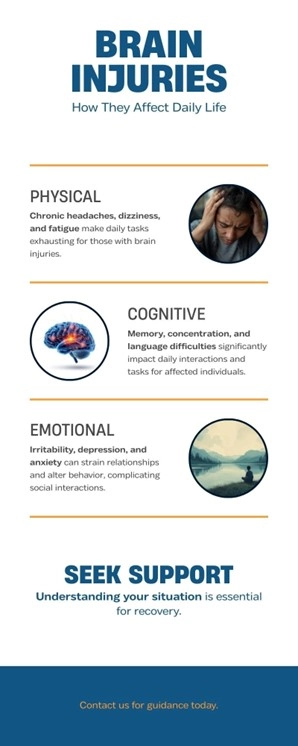
Brain injuries affect every system in your body and every aspect of your life. Physical symptoms like chronic headaches, dizziness, fatigue, and seizures make daily activities exhausting. Cognitive deficits impair memory, concentration, problem-solving, and language skills. Emotional and behavioral changes strain relationships, as irritability, depression, anxiety, and impulsiveness replace your previous personality.
Many brain injury survivors describe feeling like strangers in their own lives. Jobs that once felt routine become impossible. Hobbies lose their appeal or become too difficult. Relationships deteriorate under the stress of personality changes and role reversals as spouses become caregivers.|
The financial toll compounds these challenges. Medical bills accumulate quickly, from emergency treatment through years of rehabilitation. Lost income creates immediate pressure, while diminished earning capacity threatens long-term financial security. Many families exhaust savings, max out credit cards, and face foreclosure or bankruptcy.
Illinois law recognizes all these losses as compensable damages. Our attorneys work with medical professionals, vocational experts, economists, and life care planners to document every way your brain injury has affected you and will continue affecting you for the rest of your life.
“I’ve watched families struggle as a loved one with a brain injury becomes someone they barely recognize. The cognitive changes, the mood swings, the frustration when they can’t do things that used to be simple. Our goal is to secure enough compensation that families can access the best care and still maintain some quality of life during an incredibly difficult time.”

Navigating Insurance Company Tactics
Insurance adjusters receive training in minimizing claim payouts. They employ various strategies to reduce what they pay brain injury victims, and you need an attorney who recognizes and counters these tactics.
Adjusters often contact victims shortly after accidents, offering quick settlements before the full extent of injuries becomes apparent. These early offers rarely account for long-term complications, future medical needs, or permanent disability. Once you accept and sign a release, you cannot pursue additional compensation when your condition worsens.
Insurance companies also dispute causation, arguing that pre-existing conditions, subsequent accidents, or unrelated medical issues caused your symptoms rather than their insured’s negligence. They hire doctors to conduct independent medical examinations designed to minimize your injuries. They scrutinize your social media for photos or posts suggesting that you’re less injured than claimed.
Our firm handles all communications with insurance companies, protecting you from tactics designed to undermine your claim. We thoroughly document the link between the accident and your injury, refute biased medical opinions, and prepare responses to bad faith settlement offers.
Did You Know?
Brain injuries can worsen over time as scar tissue forms, chronic inflammation continues, and degenerative processes develop. Initial symptoms may seem manageable, but many victims experience progressive decline months or years after their accidents.
For this reason, settlements must account for future deterioration, not just current conditions. Don’t settle a brain injury claim until doctors have determined your maximum medical improvement and long-term prognosis.
Your Rights Under Illinois Law
Illinois follows a fault-based system for personal injury claims. As such, you must prove someone else’s negligence caused your brain injury. Negligence requires showing the defendant owed you a duty of care, breached that duty, and caused injuries that resulted in damages.
Drivers owe other road users a duty to operate vehicles safely. Property owners owe visitors a duty to maintain reasonably safe premises. Employers owe workers a duty to provide safe working conditions. Product manufacturers owe consumers a duty to design and produce safe products. Medical professionals owe patients a duty to provide competent care.
The statute of limitations for most personal injury cases in Illinois is two years from the injury date. Missing this deadline typically bars your claim entirely, so prompt action is essential. Some exceptions exist, such as when injuries weren’t immediately discoverable, but relying on exceptions is risky.
Illinois applies modified comparative negligence rules. If you bear partial responsibility for the accident, your compensation is reduced by your percentage of fault, but only if you’re less than 50% responsible. If you’re 50% or more at fault, you recover nothing. Insurance companies often exaggerate victim fault to reduce payouts, making strong legal representation critical.
How We Support Brain Injury Clients
From your first consultation through final settlement or verdict, we provide consistent, compassionate support tailored to your unique needs. Brain injury cases demand patience, persistence, and specialized knowledge.
- We start with a comprehensive evaluation of your case during a free consultation. This meeting allows us to understand your injury, review available evidence, identify potential defendants, and explain your legal options. There’s no pressure to hire us, and the consultation costs nothing.
- If you choose to work with us, we handle every aspect of your case on a contingency fee basis. You pay no upfront costs, and we only collect attorney fees if we recover compensation for you. This structure ensures access to quality legal representation regardless of your financial situation.
- Throughout the process, we maintain open, regular communication. You’ll always know what’s happening with your case, what comes next, and how we’re working to maximize your recovery. We answer questions promptly, explain legal concepts in plain language, and involve you in all major decisions.
- Our familiarity with Naperville, DuPage County courts, and Illinois judges gives us strategic advantages. We understand local procedures, know how to present cases effectively, and have relationships built on professionalism and credibility.
Common Questions About Brain Injury Claims
Can I Recover Compensation If I Didn't Lose Consciousness?
Yes. Many serious brain injuries occur without loss of consciousness. What matters is whether you suffered actual brain damage, not whether you were knocked out. Medical imaging, neurological testing, and symptom documentation prove injury severity regardless of whether you lost consciousness.
What If My Brain Injury Symptoms Appeared Days After the Accident?
Delayed symptoms are common with brain injuries as swelling, bleeding, and inflammation develop over time. Seek medical attention immediately when symptoms appear, and make sure doctors document the connection between your accident and symptoms. As long as medical evidence links the accident to your injury, delayed onset doesn’t prevent recovery.
How Long Will My Brain Injury Case Take?
Brain injury cases typically take longer than other personal injury claims because determining full injury extent requires time. You shouldn’t settle until doctors establish maximum medical improvement and future prognosis. Cases may resolve in months through settlement or take years if litigation becomes necessary. We prioritize thorough preparation over quick resolution to maximize your compensation.
Get the Help You Need Now
A traumatic brain injury changes everything, but you don’t have to face the legal battle alone. The Naperville brain injury attorneys at Chute, O’Malley, Knobloch & Turcy understand what you’re going through and know how to fight for the compensation that will support your recovery and future. Call (312) 775-0042 today for a free consultation.