
Naperville Failure to Diagnose Lawyer
A delayed or missed diagnosis can cost you the chance for effective treatment. When doctors fail to identify serious conditions in time, the result can be advanced illness, unnecessary procedures, or permanent injury.
At Chute, O’Malley, Knobloch & Turcy, LLC, our Naperville failure to diagnose lawyers help clients uncover what went wrong and whether it should have been caught sooner. We handle cases involving cancer, stroke, infections, and other time-sensitive conditions where earlier diagnosis could have changed the outcome.
If you are dealing with worsening symptoms or a diagnosis that came too late, you likely have questions about what happened and whether it could have been prevented. Our firm works with medical experts to review your records, identify missed warning signs, and determine if the standard of care was violated.
“When a diagnosis is missed, the harm does not come from the illness alone. It comes from lost time—the time you needed for treatment. Our job is to hold providers accountable for that lost time.”

You do not have to sort this out alone. Call Chute, O’Malley, Knobloch & Turcy at (312) 775-0042 to schedule a free consultation. You will get direct guidance on your next steps and what your case may involve.
- Se Habla Español
- 50+ Years of Combined Experience
- Risk-Free Consultations
- You Don’t Pay Unless We Win

Table of Contents
ToggleWhat Is a Failure to Diagnose?
A failure to diagnose occurs when a medical provider does not identify a condition that a reasonably careful provider would have recognized under similar circumstances. This can happen at any stage of care.
You may have experienced:
- A doctor dismissing symptoms without testing
- Delayed referrals to specialists
- Misreading lab results or imaging
- Ignoring changes in your condition over time
In many cases, the issue is not that the condition was rare or impossible to detect. It is that standard steps were skipped.

Common Conditions Often Missed
Certain conditions appear in failure-to-diagnose claims more often because early symptoms can overlap with less serious issues.
These include:





When caught early, many of these conditions are treatable. When missed, they can become life-threatening.

How a Missed Diagnosis Affects Your Health
The impact of a delayed or missed diagnosis goes beyond the initial mistake. You may face:
- Progression of disease
- More aggressive treatment
- Reduced survival rates
- Permanent disability
- Increased medical costs
For example, a cancer that could have been treated with surgery alone may later require chemotherapy or become untreatable. A stroke that was not identified early can lead to lasting neurological damage.
Time matters. When time is lost, your options shrink.
When Is a Doctor Legally Responsible?
Not every missed diagnosis leads to a valid claim. Medicine involves judgment, and some conditions are difficult to detect. However, a provider may be liable when their actions fall below the accepted standard of care.
To bring a claim, you must generally show:
1. A Doctor-Patient Relationship
You must prove that the provider had a duty to treat you. This usually exists when you sought care and received medical advice or treatment.
2. A Breach of the Standard of Care
You must show that the provider acted in a way that a reasonably careful provider would not have under similar circumstances.
3. Causation
You must prove that the failure to diagnose caused harm. This is often the most contested part of a case.
4. Damages
You must show measurable losses, such as medical bills, lost income, or reduced quality of life.
Warning Signs of a Failure to Diagnose Case
You may have a claim if you experienced any of the following:
- Repeated visits with the same symptoms and no diagnosis
- A diagnosis that changed only after your condition worsened
- A specialist identifying a condition that should have been caught earlier
- Delayed testing despite clear symptoms
- Conflicting medical opinions
If something does not feel right about your medical care, it is worth investigating.
How These Cases Are Investigated
Failure to diagnose claims rely heavily on evidence. A thorough investigation includes:
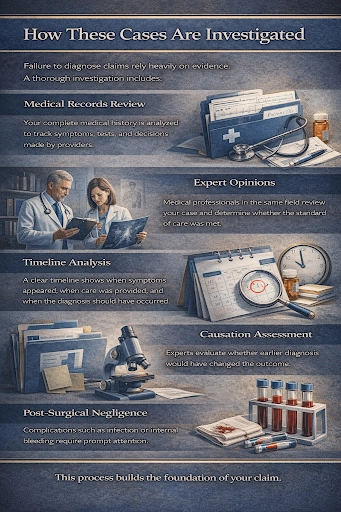
Medical Records Review
Your complete medical history is analyzed to track symptoms, tests, and decisions made by providers.
Expert Opinions
Medical professionals in the same field review your case and determine whether the standard of care was met.
Timeline Analysis
A clear timeline shows when symptoms appeared, when care was provided, and when the diagnosis should have occurred.
Causation Assessment
Experts evaluate whether earlier diagnosis would have changed the outcome.
This process builds the foundation of your claim.
Compensation Available in Failure to Diagnose Cases
If your claim is successful, compensation is intended to address both the financial impact of the missed diagnosis and the effect it has had on your daily life. These losses often extend far beyond the initial medical issue.
Economic damages focus on the measurable financial costs tied to your injury. This can include:
- The cost of past and ongoing medical treatment
- Anticipated future care, including specialists or long-term treatment
- Lost wages during your recovery period
- Reduced earning capacity if you cannot return to the same type of work
Non-economic damages reflect how the delayed diagnosis has affected your quality of life. These damages may include:
- Physical pain and ongoing discomfort
- Emotional distress and mental strain
- Loss of normal life and limitations on daily activities
In more serious cases, compensation may also account for permanent disability or the need for lifelong care, depending on how the delayed diagnosis has impacted your future.
Why Timing Matters in Illinois
Illinois law places strict limits on how long you have to file a medical malpractice claim. This deadline, known as the statute of limitations, can determine whether your case moves forward or is barred entirely.
In most situations, you have two years from the date you discovered, or reasonably should have discovered, your injury. This timeline often begins when you learn that a diagnosis was missed or delayed, not necessarily when the medical error first occurred.
That said, these rules are not always straightforward. Certain factors can shorten or extend the deadline, depending on the details of your case. Waiting too long can result in losing your right to pursue compensation, regardless of how strong your claim may be.
Taking action early gives your legal team time to gather records, consult medical professionals, and build a clear, well-supported case.
Challenges in Failure to Diagnose Cases
These cases are often complex and require careful development to move forward successfully. You may face several challenges, including:
- Disputes over whether an earlier diagnosis would have changed the outcome
- Conflicting expert opinions regarding the standard of care
- Extensive medical documentation that must be reviewed and organized
- Aggressive defense strategies from healthcare providers and insurers
Insurance companies often argue that the condition would have progressed the same way regardless of earlier detection. To succeed, your claim must clearly demonstrate how the delay led to additional harm, limited treatment options, or a worse overall outcome.
What You Can Do After a Missed Diagnosis
If you suspect a failure to diagnose, the steps you take next can affect both your health and your ability to pursue a claim. Acting with purpose helps protect your well-being while also preserving key evidence.
Start by seeking a second medical opinion. Another provider can evaluate your condition, confirm whether something was missed, and recommend appropriate treatment moving forward. This step can also help establish that your condition should have been identified earlier.
You should also request complete copies of your medical records, including test results, imaging, and physician notes. These documents help create a clear timeline of your care and may reveal gaps in the diagnostic process.
As you move forward, keep detailed notes about your symptoms, changes in your condition, and any new treatments. At the same time, avoid discussing your situation with insurance representatives until you have legal guidance.
Speaking with a lawyer early allows your case to be reviewed thoroughly and helps ensure that your rights are protected from the start.
How Legal Representation Helps You
Handling a failure to diagnose claim on your own is difficult. These cases require both legal and medical insight, along with access to qualified experts who can evaluate what went wrong.
With legal representation, you gain:
- A detailed case evaluation that identifies strengths and potential challenges
- Access to medical experts who can review records and provide professional opinions
- Strategic negotiation with insurers who may attempt to reduce or deny your claim
- Preparation for trial if a fair resolution is not reached
You also gain peace of mind knowing your case is handled with care, focus, and a clear strategy from start to finish.
Frequently Asked Questions About Failure to Diagnose Claims
How do I know if my diagnosis was delayed or missed?
You may not know right away. Many people only realize something went wrong after their condition worsens or another doctor identifies the issue. A review of your medical records can reveal whether earlier warning signs were present and whether proper steps were taken.
Can I file a claim if my condition was eventually diagnosed?
Yes. A delayed diagnosis can still cause harm, even if the condition was later identified. The key question is whether the delay led to worse outcomes, more aggressive treatment, or reduced chances of recovery. These factors play a central role in your claim.
What if my doctor says the condition was hard to detect?
Some conditions are difficult to diagnose, but that does not excuse all errors. The issue is whether a reasonably careful provider would have taken additional steps. Medical experts review your case to determine whether the standard of care was met.
How long does a failure to diagnose case take?
These cases often take time due to their complexity. Investigations, expert reviews, and negotiations can take months or longer. If the case goes to trial, it may take additional time. Each case follows its own timeline based on the facts involved.
What compensation can I expect?
Compensation depends on the severity of harm, the cost of medical care, and the impact on your life. Cases involving permanent injury or long-term care needs often result in higher compensation. A detailed evaluation will give you a clearer estimate.
Speak With a Naperville Failure to Diagnose Lawyer Today
A missed diagnosis can alter your future, but you have options. If you suffered harm due to a medical provider’s failure to act, you can pursue accountability and compensation.
You need clear answers and a plan. Call Chute, O’Malley, Knobloch & Turcy, LLC at (312) 775-0042 to schedule a free consultation. Your Naperville failure to diagnose lawyer will review your situation and help you take the next step forward.