
Naperville Surgical Errors Lawyer
A surgical error can leave you with lasting injuries, additional procedures, and uncertainty about your future. When a preventable mistake occurs in the operating room, the impact often extends far beyond the initial procedure. If you were harmed during surgery in Naperville, you may have a valid legal claim.
At Chute, O’Malley, Knobloch & Turcy, you can work with a Naperville surgical errors lawyer who will review what happened and determine whether proper medical protocols were followed. Surgical teams are expected to follow strict safety standards, and when those safeguards are ignored or rushed, the risk of serious harm increases. Many of these errors stem from breakdowns in communication, planning, or execution.
“Surgery requires precision and coordination. When a team fails to follow established safeguards, the consequences can be life-altering. Accountability matters because it helps prevent the same harm from happening again.”

You do not have to face this situation alone. Call our team at (312) 775-0042 to schedule a free consultation. You will receive direct guidance on your rights and the next steps in your case.
- Se Habla Español
- 50+ Years of Combined Experience
- Risk-Free Consultations
- You Don’t Pay Unless We Win

Table of Contents
ToggleWhat Is a Surgical Error?
A surgical error occurs when a preventable mistake happens before, during, or after a procedure. These errors differ from known surgical risks. They involve actions that fall below accepted medical standards.
You may have experienced a surgical error if:
- The wrong procedure was performed
- The wrong body part was operated on
- Surgical instruments were left inside your body
- Anesthesia was administered improperly
- Post-operative complications were ignored
These are not unavoidable outcomes. They often result from lapses in safety protocols.

Common Types of Surgical Errors
Surgical errors can take many forms, depending on the type of procedure and the circumstances involved.
Wrong-Site or Wrong-Procedure Surgery
Operating on the wrong location or performing the wrong procedure is a serious breakdown in protocol. Surgical teams are required to verify patient identity, procedure type, and surgical site before beginning.
Retained Surgical Objects
Sponges, tools, or other materials left inside the body can cause infection, pain, and additional surgeries. Counting protocols exist to prevent this.
Anesthesia Errors
Errors involving anesthesia can lead to brain damage, cardiac complications, or awareness during surgery. These mistakes may involve dosage errors or failure to monitor vital signs.
Nerve or Organ Damage
Accidental damage to surrounding tissue can occur when a surgeon acts carelessly or without proper planning. This can result in permanent impairment.
Post-Surgical Negligence
Complications such as infection or internal bleeding require prompt attention. Failure to monitor or respond to warning signs can worsen your condition.
How Surgical Errors Happen
Most surgical errors are preventable. They often arise from systemic issues within the surgical team or facility.
Common causes include:
- Poor communication among staff
- Inadequate pre-surgical planning
- Fatigue or overworked medical personnel
- Failure to follow safety checklists
- Lack of proper training
Even a single breakdown in protocol can lead to serious consequences.
The Impact of a Surgical Error on Your Life
The effects of a surgical error can extend well beyond physical injury.
You may face:
- Additional surgeries
- Long-term rehabilitation
- Chronic pain
- Loss of mobility or function
- Emotional distress
- Financial strain due to medical bills and lost income
In some cases, the damage is permanent. What should have been a routine procedure can become a life-changing event.

When a Surgical Error Becomes Medical Malpractice
Not every poor outcome qualifies as malpractice. To bring a valid claim, certain elements must be present.
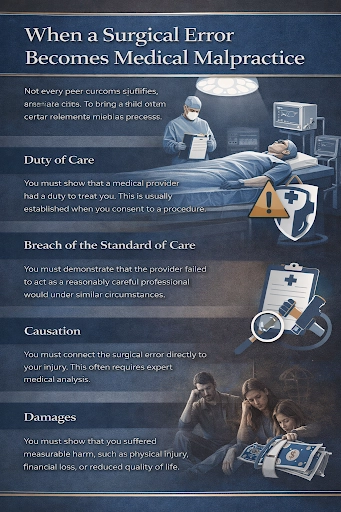
Duty of Care
You must show that a medical provider had a duty to treat you. This is usually established when you consent to a procedure.
Breach of the Standard of Care
You must demonstrate that the provider failed to act as a reasonably careful professional would under similar circumstances.
Causation
You must connect the surgical error directly to your injury. This often requires expert medical analysis.
Damages
You must show that you suffered measurable harm, such as physical injury, financial loss, or reduced quality of life.
Evidence Used in Surgical Error Cases
Surgical error claims rely heavily on evidence. These cases often involve detailed records and expert opinions that explain what happened during your procedure.
Your case may include:
- Operative reports that document the procedure step by step
- Imaging studies that reveal internal injuries or retained objects
- Testimony from medical professionals who review your care
- Hospital policies that outline required safety protocols
Each piece of evidence helps establish whether the surgical team acted appropriately or failed to meet accepted standards.
Compensation for Surgical Error Victims
If you were harmed by a surgical error, compensation is meant to address both the financial and personal impact of that harm. These cases often involve losses that extend well beyond the initial procedure.
Economic damages focus on the financial costs tied to your injury. This may include hospital bills, follow-up treatment, rehabilitation, and any future care you may require. If your injury affects your ability to work, you may also recover compensation for lost income and reduced earning capacity.
Non-economic damages reflect how the injury affects your daily life. Pain, discomfort, and emotional strain can alter how you move, work, and interact with others. You may also experience a loss of independence or changes in your quality of life.
In more serious cases, where long-term or permanent injury occurs, compensation may account for ongoing care needs and the lasting impact on your future.
Time Limits for Filing a Claim in Illinois
Illinois law sets strict deadlines for filing medical malpractice claims. In most cases, you have two years from the date you discovered or reasonably should have discovered the injury.
However, these timelines can vary depending on the circumstances. Delays in filing can limit your ability to recover compensation. Acting early allows for a more thorough investigation and better preservation of evidence.
Challenges You May Face in a Surgical Error Case
Surgical error claims often involve complex medical issues that require careful review and strong supporting evidence. As your case develops, you may encounter several obstacles that can affect how your claim is evaluated and resolved.
Disputes Over Causation
One of the most common challenges involves proving that the surgical error directly caused your injury. Healthcare providers may argue that your condition was a known risk or would have occurred regardless of the procedure.
Conflicting Medical Opinions
These cases often rely on expert testimony. It is not unusual for medical professionals to disagree about whether the standard of care was met, which can complicate your claim.
Technical and Detailed Evidence
Surgical records, imaging, and medical data must be carefully analyzed. This information is often dense and requires professional interpretation.
Aggressive Defense Strategies
Hospitals and insurers may work to minimize liability. A clear, well-prepared strategy helps address these challenges effectively.
Meet the Attorneys Who Will Help You Maximize Your Sattlement




What To Do If You Suspect a Surgical Error
If a surgical error caused your injury, what you do next can directly affect both your health and your legal claim. Acting quickly helps protect your well-being while also preserving the evidence needed to support your case.
Your first priority should be your medical condition. Seek immediate care from another qualified provider if you are experiencing complications, unusual pain, or unexpected symptoms. Prompt treatment can prevent further harm and creates a clear medical record of what you are experiencing after the procedure.
You should also request complete copies of your medical records as soon as possible. This includes surgical reports, discharge summaries, imaging results, and follow-up care notes. These documents form the foundation of your claim and help establish what occurred before, during, and after your surgery.
As you recover, keep detailed notes about your symptoms and daily limitations. Record changes in pain levels, mobility, and any new diagnoses or treatments. This type of documentation can provide a clear timeline and demonstrate how the injury has affected your life over time.
It is also important to be cautious when dealing with insurance representatives or hospital administrators. You may be contacted for statements or asked to sign documents. Do not discuss details of your situation or accept any agreements before speaking with a medical malpractice lawyer. Early statements can be used against you later.
Finally, speak with a lawyer as soon as you can. Surgical error cases require a careful review of medical evidence and input from qualified professionals. Early legal guidance allows your case to be evaluated properly and helps ensure that important deadlines are not missed.
How Legal Support Strengthens Your Case
A surgical error claim requires more than basic legal knowledge. It demands a deep understanding of medical standards and evidence.
With legal support, you gain:
- A full investigation of your case
- Access to qualified medical experts
- Skilled negotiation with insurance companies
- Preparation for trial if needed
You also gain clarity during a difficult time, allowing you to focus on your recovery while your case is handled with care.
Frequently Asked Questions About Surgical Error Claims
What qualifies as a surgical error?
A surgical error involves a preventable mistake that occurs during a procedure. This includes wrong-site surgery, retained instruments, or improper anesthesia. The key issue is whether the error could have been avoided if proper medical standards were followed.
How do I know if my injury was caused by a surgical mistake?
You may suspect a surgical error if your recovery does not follow the expected course or if new symptoms appear after surgery. A review of your medical records and expert analysis can help determine whether a mistake occurred during your procedure.
Can I file a claim if I signed a consent form?
Yes. Consent forms acknowledge known risks, but they do not excuse negligence. If your injury resulted from a preventable error rather than an accepted risk, you may still have a valid claim.
How long will my surgical error case take?
These cases often take time due to their complexity. Investigations, expert reviews, and negotiations can extend the timeline. If the case proceeds to trial, it may take longer. Each case depends on its specific facts.
What damages can I recover?
You may recover compensation for medical expenses, lost income, and pain and suffering. In cases involving long-term injury, damages may also include future care needs and loss of earning ability.
Speak With a Naperville Surgical Errors Lawyer Today
A surgical error can leave lasting effects, but you have the right to seek accountability. If a preventable mistake caused your injury, you can pursue compensation for the harm you suffered.
Take the next step now. Call Chute, O’Malley, Knobloch & Turcy at (312) 775-0042 to schedule a free consultation. A Naperville surgical errors lawyer will review your case and help you move forward with confidence.