
Naperville T-Bone and Intersection Accident Lawyers
A T-bone crash is often disputed from the beginning. One driver says they had the light. The other says they had the right of way. Insurance companies look for uncertainty they can use against you, especially when the crash happened at a busy Naperville intersection with multiple lanes, turning vehicles, cameras, and witnesses.
These cases require more than a basic car accident claim. The position of the vehicles, traffic signal timing, point of impact, witness statements, nearby video footage, and medical records can all affect whether the insurance company accepts fault or tries to shift blame.
Chute, O’Malley, Knobloch & Turcy, LLC represents people injured in serious T-bone and intersection accidents in Naperville and throughout DuPage County. Our attorneys investigate what happened, identify the evidence needed to prove fault, and pursue compensation for medical care, lost income, pain and suffering, and the long-term impact of the crash.
“Intersection accidents often leave victims dealing with painful injuries and difficult questions about fault. Our job is to uncover what happened and pursue the compensation our clients need after a serious crash.”

Call (312) 775-0042 today for a free consultation with a Naperville T-bone and intersection accident lawyer.
- Se Habla Español
- 50+ Years of Combined Experience
- Risk-Free Consultations
- You Don’t Pay Unless We Win

Table of Contents
ToggleWhy T-Bone Accident Claims Are Often Disputed
T-bone accidents often create immediate disagreement about who had the right of way. One driver may say they entered the intersection on a green light. The other may claim the light had already changed, that the turning driver failed to yield, or that the other vehicle appeared suddenly from another lane.
Insurance companies may use these conflicting accounts to challenge liability. Even when you know the other driver caused the crash, the insurer may argue that you were speeding, distracted, entered the intersection too late, or could have avoided the collision. These arguments can reduce the value of your claim if they are not answered with evidence.
That evidence may include the police report, traffic signal timing, vehicle damage, dashcam footage, nearby business surveillance, witness statements, intersection layout, and the final resting positions of the vehicles. In serious cases, an accident reconstruction expert may be needed to explain how the crash happened and which driver’s actions caused the impact.
Because some evidence may be erased, overwritten, repaired, or lost, early investigation matters. A Naperville T-bone and intersection accident lawyer at our firm can help identify what proof is available, preserve it, and use it to push back when the insurance company tries to shift blame.

How T-Bone and Intersection Accidents Happen
Most intersection accidents happen because drivers fail to pay attention, ignore traffic signals, or make dangerous decisions behind the wheel. At intersections, that often means a driver ran a red light, rolled through a stop sign, turned left without enough time, or failed to yield before crossing traffic.
These crashes can also happen when traffic patterns are confusing or congested. A driver may try to beat a yellow light, misjudge the speed of an oncoming vehicle, turn across multiple lanes, or follow another vehicle into an intersection without confirming the way is clear.
Common causes of T-bone accidents include:
- Running red lights or stop signs
- Distracted driving
- Speeding through intersections
- Failing to yield while turning left
- Drunk or impaired driving
- Driver fatigue
- Aggressive driving
- Unsafe lane changes
Determining what caused an intersection accident is often one of the most important parts of a personal injury claim. Police reports, traffic camera footage, witness statements, crash scene evidence, and vehicle damage patterns can all help establish fault after a collision.
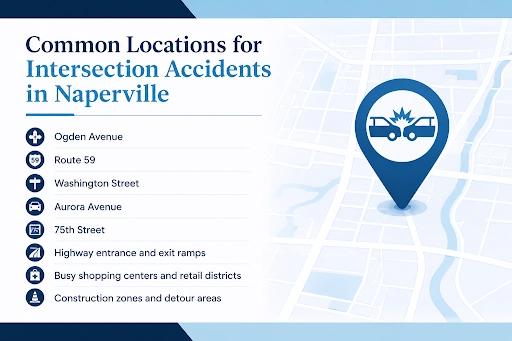
Common Locations for Intersection Accidents in Naperville
T-bone accidents commonly happen near high-traffic retail corridors, multi-lane intersections, and areas with frequent stop-and-go traffic, especially during morning and evening commutes. The exact location of the crash can affect what evidence is available and how fault is proven.
Intersection accidents frequently occur near:
- Ogden Avenue
- Route 59
- Washington Street
- Aurora Avenue
- 75th Street
- Highway entrance and exit ramps
- Busy shopping centers and retail districts
- Construction zones and detour areas
These areas can involve sudden stops, left-turn conflicts, lane changes, blocked sight lines, and drivers trying to move through a light before it changes. When a crash happens in one of these locations, evidence may be available from nearby businesses, traffic cameras, dashcams, witnesses, or roadway design features.
A careful investigation should look beyond the drivers’ statements. The intersection layout, traffic controls, vehicle resting positions, skid marks, debris field, and damage patterns can all help show how the collision occurred.
Evidence That Can Help Prove Fault After a T-Bone Accident
Fault in a T-bone accident is not always proven by the drivers’ statements alone. In many intersection crashes, both drivers may give different accounts of who had the light, who had the right of way, or who entered the intersection first.
Evidence can help show what happened before impact. Depending on the crash, that may include:
- The police report
- Photos of the vehicles and crash scene
- Traffic signal timing information
- Dashcam footage
- Video from nearby businesses or homes
- Witness statements
- Vehicle damage and point of impact
- Skid marks, debris, and final resting positions
- Cell phone records, when distracted driving is suspected
- Event data recorder information from the vehicles
This evidence can be especially important when the insurance company tries to argue that you were speeding, distracted, or partly responsible for the collision. A strong investigation looks at the movement of both vehicles before impact, not just where the vehicles ended up after the crash.
Some evidence may only be available for a short time. Video footage can be overwritten, vehicles may be repaired or totaled, and witnesses can become harder to locate. For that reason, early action can make a significant difference in a disputed intersection accident claim.

What To Do After an Intersection Accident
The days following a serious accident are often overwhelming. Between medical appointments, missed work, vehicle repairs, and calls from insurance companies, many crash victims are unsure what to do next.
The steps you take after an accident can affect both your recovery and your ability to pursue compensation.
Follow Medical Instructions
Continue attending medical appointments and follow your treatment plan closely. Insurance companies often look for gaps in medical care when attempting to reduce the value of a claim.
Preserve Records and Evidence
Save medical bills, discharge paperwork, repair estimates, photographs, and any communication related to the accident. These records can help document your injuries and financial losses.
Avoid Speaking With Insurance Adjusters Alone
Insurance adjusters may contact you shortly after the collision and ask for recorded statements or quick settlements. Statements made early in the claims process may later be used to dispute liability or challenge your injuries.
Document How the Injuries Affect Your Daily Life
Keep notes about your pain levels, missed work, physical limitations, and how the injuries affect your daily routine. This information can help demonstrate the long-term impact of the crash.
Speaking with an attorney early in the process can help protect your rights and preserve important evidence.
Illinois follows a modified comparative negligence system. This means an injured driver may still recover compensation if they were less than 51% responsible for the crash. However, compensation may be reduced based on the injured person’s percentage of fault.
Why T-Bone Accidents Are Often So Serious
Side-impact collisions frequently cause severe injuries because the sides of passenger vehicles provide less structural protection than the front or rear portions of a car. In many T-bone accidents, the driver or passenger absorbs the force of the impact through the side doors and windows with little time to react before the collision occurs.
The severity of injuries often depends on the speed and force of the collision. Common injuries in intersection accidents include:
- Traumatic brain injuries
- Neck and back injuries
- Spinal cord injuries
- Broken bones
- Internal bleeding
- Chest and rib injuries
- Shoulder injuries
- Knee and leg injuries
Some symptoms may not fully appear until days after the accident. Continuing medical treatment and following your doctor’s recommendations can help protect both your health and your injury claim.
What Compensation Can You Recover After a T-Bone Accident?
The value of an intersection accident claim depends on the severity of the injuries, the medical treatment required, the impact on your ability to work, and the long-term effects of the crash.
A successful personal injury claim may include compensation for:
- Emergency medical treatment
- Hospital stays and surgeries
- Rehabilitation and physical therapy
- Lost wages and reduced earning capacity
- Pain and suffering
- Emotional distress
- Property damage
- Future medical expenses
Serious side-impact collisions can leave victims dealing with long-term pain, mobility limitations, and ongoing medical treatment. Calculating future losses often requires a detailed review of medical records, treatment plans, and the long-term effects of the injuries.
Do You Need a Lawyer After an Intersection Accident?
Not every car accident requires legal action. However, if you suffered serious injuries, required medical treatment, missed time from work, or are dealing with disputes regarding fault, speaking with an attorney can help you better understand your legal options.
Many T-bone accident claims become complicated because drivers often argue that they are not at fault for what happened. One driver may claim they had a green light, while another insists they entered the intersection legally. Insurance companies frequently use these disputes to delay claims or reduce compensation.
An attorney can investigate the crash, preserve evidence, review insurance coverage, and negotiate with insurers on your behalf. If the insurance company refuses to offer a fair settlement, your lawyer may also pursue compensation through a personal injury lawsuit.
Signs you may benefit from speaking with a lawyer include:
- Serious or permanent injuries
- Surgery or long-term medical treatment
- Disputed liability
- Multiple vehicles involved in the crash
- Pressure from insurance adjusters
- Missed work or lost income
- A settlement offer that seems too low
Waiting too long to seek legal guidance can make it harder to preserve evidence and build a strong claim.
Frequently Asked Questions About T-Bone Accident Claims
Intersection accidents often raise questions about fault, insurance claims, medical treatment, and legal rights. The answers below address some common concerns injured drivers have after a serious T-bone accident.
What if the other driver says I caused the accident?
It is common for drivers involved in intersection accidents to dispute who had the right of way. Insurance companies may use these conflicting statements to delay claims or reduce compensation. An attorney can help you gather the evidence needed to prove your case and hold the responsible driver to account.
Should I accept the insurance company’s first settlement offer?
Insurance companies sometimes make quick settlement offers before the full extent of a victim’s injuries becomes clear. Accepting an early settlement may prevent you from pursuing additional compensation later if ongoing treatment or future medical expenses arise.
How long do I have to file a lawsuit after a car accident in Illinois?
Illinois generally gives injured victims two years to file a personal injury lawsuit after a car accident. Waiting too long can make it harder to preserve evidence and protect your claim.
What if my injuries did not appear immediately after the accident?
Some injuries become more noticeable days after a collision. Neck injuries, traumatic brain injuries, back injuries, and soft tissue damage may worsen over time. Continuing medical treatment and documenting your symptoms can help support your injury claim.
Contact Our Naperville T-Bone and Intersection Accident Lawyers
A serious intersection accident can leave you dealing with painful injuries, financial stress, and uncertainty about what comes next. At Chute, O’Malley, Knobloch & Turcy, LLC, our attorneys help injured crash victims pursue compensation and hold negligent drivers accountable.
If you or a loved one was injured in a T-bone or intersection accident in Naperville or DuPage County, call (312) 775-0042 today for a free consultation with our legal team.