
Naperville Rear-End Accident Lawyer
Rear-end crashes happen every day across Naperville’s busiest roads. If another driver struck your vehicle from behind, you may have the right to pursue compensation for your injuries, medical expenses, and lost income. A Naperville rear-end accident lawyer at Chute, O’Malley, Knobloch & Turcy can help you understand your legal rights and how Illinois law applies to your situation.
Rear-end accidents often occur during heavy commuter traffic along Route 59, Ogden Avenue, and Washington Street. Even collisions that appear minor can lead to neck injuries, spinal damage, or long-term pain. Insurance companies sometimes attempt to minimize these injuries or dispute claims, which can make recovery more difficult for victims.
“When a driver fails to maintain a safe distance and causes a rear-end crash, the injured person should not carry the financial burden alone. Illinois law allows victims to pursue compensation when negligence leads to harm.”

If you suffered injuries in a crash, you can discuss your situation with a Naperville rear-end accident lawyer today. Call (312) 775-0042 to get started with a consultation.
- Se Habla Español
- 50+ Years of Combined Experience
- Risk-Free Consultations
- You Don’t Pay Unless We Win

Table of Contents
Toggle
Why Rear-End Accidents Happen in Naperville
Rear-end collisions usually occur when drivers fail to leave enough space between vehicles. Traffic congestion, driver distraction, and sudden braking often contribute to these crashes.
Naperville’s growing population and heavy commuter traffic create conditions where rear-end accidents happen frequently. Drivers traveling along major routes may encounter sudden slowdowns near intersections, construction zones, or highway entrances.
Several factors commonly contribute to rear-end accidents.
Distracted Driving
Drivers who look away from the road for even a few seconds may miss critical changes in traffic. Texting on the phone, changing navigation systems, and in-vehicle distractions can prevent a driver from noticing that traffic has stopped.
Tailgating
Following another vehicle too closely reduces reaction time. If the vehicle ahead stops suddenly, the driver behind may not have enough space to brake safely.
Speeding
Higher speeds increase stopping distance and make collisions more severe. Even a short delay in reaction time can result in a crash.
Weather Conditions
Rain, snow, and icy roads make it harder for drivers to stop quickly. Drivers must adjust their speed and following distance when weather conditions affect the roadway.






Common Injuries Caused by Rear-End Collisions
Rear-end accidents frequently cause injuries that may not appear immediately. The sudden impact forces the body forward and backward, placing strain on muscles, ligaments, and the spine.
Victims may experience several types of injuries.
Whiplash and Neck Injuries
Whiplash occurs when the neck moves rapidly back and forth due to the force of the collision. Symptoms often include stiffness, headaches, dizziness, and limited mobility.
Spinal Injuries
Rear-end crashes can damage spinal discs and surrounding nerves. Herniated discs and nerve compression may cause chronic pain, numbness, or weakness.
Traumatic Brain Injuries
Victims sometimes strike their heads against parts of the vehicle during impact. Brain injuries can affect memory, concentration, and emotional health.
Soft Tissue Injuries
Muscles and ligaments may stretch or tear during a collision. These injuries often require physical therapy and ongoing medical care.
Liability in a Rear-End Accident Case
Illinois follows an at-fault system for motor vehicle accidents. The driver responsible for causing the collision is typically responsible for damages that result from the crash. Illinois also follows a modified comparative negligence rule, which means compensation may be reduced if more than one driver shares responsibility for the accident.
In rear-end accidents, the driver who strikes another vehicle from behind is frequently considered responsible. Drivers must maintain a safe following distance and remain attentive to changing traffic conditions.
However, investigators still review several types of evidence when determining fault.
- Police Reports – Officers responding to the crash typically prepare reports describing the accident scene, vehicle damage, and witness statements.
- Traffic Camera Footage – Some Naperville intersections use traffic cameras that may capture details about how the collision occurred.
- Witness Statements – Individuals who observed the crash can provide important information about driver behavior before the collision.
- Vehicle Damage Analysis – The location and severity of vehicle damage may help accident reconstruction specialists determine the sequence of events.
Reviewing this evidence allows investigators and attorneys to determine how the collision occurred and whether another driver should be held responsible for the damages that followed.

What to Do After a Rear-End Accident During Recovery
Many injured victims begin exploring legal options after leaving the crash scene and receiving medical treatment. The steps taken during recovery can still affect the strength of a claim.
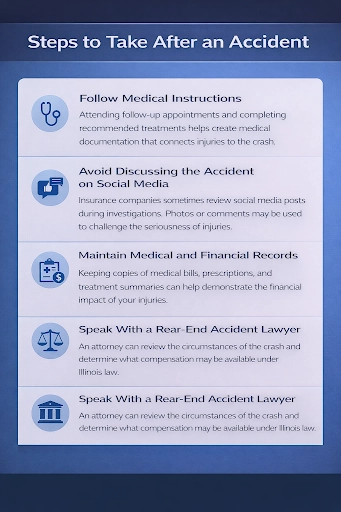
Follow Medical Instructions
Attending follow-up appointments and completing recommended treatments helps create medical documentation that connects injuries to the crash.
Avoid Discussing the Accident on Social Media
Insurance companies sometimes review social media posts during investigations. Photos or comments may be used to challenge the seriousness of injuries.
Maintain Medical and Financial Records
Keeping copies of medical bills, prescriptions, and treatment summaries can help demonstrate the financial impact of your injuries.
Speak With a Rear-End Accident Lawyer
An attorney can review the circumstances of the crash and determine what compensation may be available under Illinois law.
Recovering Compensation After a Rear-End Accident
Victims injured in rear-end crashes may pursue compensation for the losses caused by the collision. A serious accident can affect nearly every part of your life, from your physical health to your financial stability.
Compensation in a rear-end accident case is meant to help address the costs and hardships that follow an unexpected crash. When another driver’s negligence caused the accident, you may have the right to recover damages that help restore financial balance during recovery.
Medical Expenses
Medical care often begins immediately after a rear-end crash and may continue for months. Emergency treatment, diagnostic testing, physical therapy, and follow-up appointments can create significant financial pressure while you are still trying to heal.
Compensation for medical expenses helps ensure that injured victims can receive the treatment their doctors recommend without worrying about how those bills will be paid. In some cases, future medical care may also be considered if injuries require ongoing treatment or rehabilitation.
Lost Income
Many rear-end accident victims are unable to return to work while recovering from their injuries. Even a short absence from work can create financial stress, especially when medical bills begin to accumulate.
Compensation for lost income helps replace wages that were missed during recovery. If injuries prevent you from returning to the same job or limit your ability to work in the future, reduced earning capacity may also be considered when calculating damages.
Pain and Suffering
Rear-end collisions can cause more than financial losses. Chronic pain, limited mobility, and emotional stress often follow serious injuries. These effects can interfere with everyday activities, relationships, and overall quality of life.
Pain and suffering damages recognize the physical discomfort and emotional strain that victims experience after an accident. While these losses are not tied to specific bills, they still represent a real impact on daily life.
Property Damage
Vehicle damage is often one of the first challenges victims face after a rear-end accident. Repair costs, towing expenses, and rental vehicles can create additional financial strain during an already stressful time.
Compensation for property damage helps restore what was lost in the crash by covering repair costs or the value of a vehicle that cannot be repaired. This allows victims to regain reliable transportation and move forward after the accident.
Challenges That Can Arise in Rear-End Accident Claims
Rear-end accident claims sometimes involve disputes with insurance companies. While liability may appear straightforward, insurers often raise questions about injuries, treatment, or fault in an effort to reduce payouts.
Several challenges frequently arise during these claims:
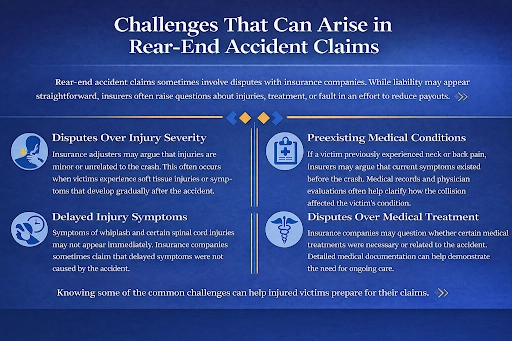
- Disputes Over Injury Severity – Insurance adjusters may argue that injuries are minor or unrelated to the crash. This often occurs when victims experience soft tissue injuries or symptoms that develop gradually after the accident.
- Delayed Injury Symptoms – Symptoms of whiplash and certain spinal cord injuries may not appear immediately. Insurance companies sometimes claim that delayed symptoms were not caused by the accident.
- Preexisting Medical Conditions – If a victim previously experienced neck or back pain, insurers may argue that current symptoms existed before the crash. Medical records and physician evaluations often help clarify how the collision affected the victim’s condition.
- Disputes Over Medical Treatment – Insurance companies may question whether certain medical treatments were necessary or related to the accident. Detailed medical documentation can help demonstrate the need for ongoing care.
Knowing some of the common challenges can help injured victims prepare for the claims.
Why Local Legal Representation Matters in Naperville
Working with an attorney who understands Naperville and DuPage County can provide advantages when pursuing a personal injury claim.
Our car accident attorneys are familiar with the 18th Judicial Circuit Court in DuPage County, as well as the procedures followed by local police departments and insurance carriers. They also understand traffic patterns and accident-prone areas within the community.
This local knowledge can help attorneys evaluate accident circumstances and build stronger claims on behalf of injured clients.
Frequently Asked Questions About Rear-End Accidents
Rear-end accidents often leave drivers with questions about their legal rights and what steps may follow after a crash. The answers below address several common concerns.
Are rear-end accidents always the fault of the driver behind?
Not always. While the rear driver is often responsible, certain circumstances may change liability. For example, the lead driver may reverse suddenly, stop without reason, or operate a vehicle with malfunctioning brake lights. Evidence gathered during the investigation helps determine which driver is responsible.
How long do I have to file a lawsuit after a rear-end accident in Illinois?
Under Illinois law, most personal injury claims must be filed within two years of the date the injury occurred. Claims involving damage to property can fall under different filing timelines. Since certain factors may change how these deadlines apply, speaking with an attorney can help determine the appropriate timeframe for a particular case.
Will my rear-end accident case go to trial?
Many personal injury claims resolve through negotiations with insurance companies. However, if a fair settlement cannot be reached, filing a lawsuit may become necessary. Preparing a case for trial can also encourage insurance companies to negotiate more seriously during settlement discussions.
How much is a rear-end accident claim worth?
The value of a claim depends on factors such as medical costs, lost income, long-term treatment needs, and how the injuries affect daily life. Every case is different, so compensation varies depending on the evidence and the circumstances of the accident.
Speak With a Naperville Rear-End Accident Lawyer Today
Rear-end collisions can leave victims dealing with medical treatment, financial stress, and uncertainty about the future. When another driver’s negligence caused the crash, Illinois law allows injured victims to pursue compensation for the losses they experienced.
If you were injured in a rear-end crash in Naperville or a nearby community, a Naperville rear-end accident lawyer can review your situation and explain your legal options.
Call Chute, O’Malley, Knobloch & Turcy at (312) 775-0042 to get started with a free consultation, and learn how Illinois personal injury law may apply to your rear-end accident claim.